

How Often Should I Groom My Dog? A Friendly Guide for Every Coat Type
If you've ever looked at your furry best friend and wondered, "How often should I groom my dog?", you're definitely not alone. Whether your dog has a silky flowing coat, a curly teddy bear look, or a short, sleek jacket, regular grooming is one of the best things you can do to keep them healthy, happy, and comfortable.
The truth is, there isn't a one-size-fits-all answer. Every dog is different, and the right grooming schedule depends on their coat type, coat length, lifestyle, and breed.
Let's take a closer look!
Why Is Regular Dog Grooming So Important?
Dog grooming isn't just about keeping your pup looking adorable (although that's definitely a bonus!).
Regular grooming helps to:
-
Prevent painful knots and matting
-
Remove dirt, loose hair, and debris
-
Keep skin healthy and allow it to breathe
-
Spot lumps, bumps, parasites, or skin issues early
-
Reduce shedding around the home
-
Keep nails, ears, and paws in great condition
-
Make your dog feel comfortable and happy
Think of grooming as part of your dog's regular healthcare routine.
How Often Should Different Coat Types Be Groomed?
Different coats have very different needs. Here's a handy guide.
Short-Haired Dogs
Examples include Labradors, Beagles, Boxers, and Pugs.
Short coats are generally low maintenance, but they still benefit from regular brushing to remove loose hair and distribute natural oils.
Recommended grooming schedule:
-
Brush: Once a week
-
Professional groom: Every 8–12 weeks (or as needed)
Medium-Coated Dogs
Examples include Border Collies, Golden Retrievers, and Spaniels.
These dogs have more feathering and longer hair that can easily become tangled.
Recommended grooming schedule:
-
Brush: 2–3 times each week
-
Professional groom: Every 6–8 weeks
Long-Haired Dogs
Examples include Shih Tzus, Yorkshire Terriers, Maltese, and Afghan Hounds.
Long coats require the most maintenance. Without regular brushing, mats can develop surprisingly quickly.
Recommended grooming schedule:
-
Brush: Daily
-
Professional groom: Every 4–6 weeks
Curly or Wool Coats
Examples include Poodles, Cockapoos, Labradoodles, Cavapoos, and Bichon Frises.
Curly coats don't shed much, but they trap loose hair inside the coat. This means mats can form beneath the surface without you even noticing.
Recommended grooming schedule:
-
Brush: Every day or at least every other day
-
Professional groom: Every 4–6 weeks
Double-Coated Dogs
Examples include Huskies, German Shepherds, Samoyeds, and Chow Chows.
These breeds have a soft undercoat beneath a protective topcoat. Regular brushing helps remove dead undercoat, especially during seasonal shedding.
Recommended grooming schedule:
-
Brush: 2–3 times each week (daily during shedding season)
-
Professional groom: Every 8–12 weeks
Why Home Brushing Matters
Professional grooming appointments are important, but they're only part of the picture.
Brushing your dog at home between appointments keeps their coat healthy and prevents painful matting. Even just 5–10 minutes a few times a week can make a huge difference.
It's also a lovely bonding activity—and many dogs grow to love the extra attention!
How to Brush Your Dog Properly
A quick brush over the top isn't always enough.
Try these simple steps:
Start with the right brush.
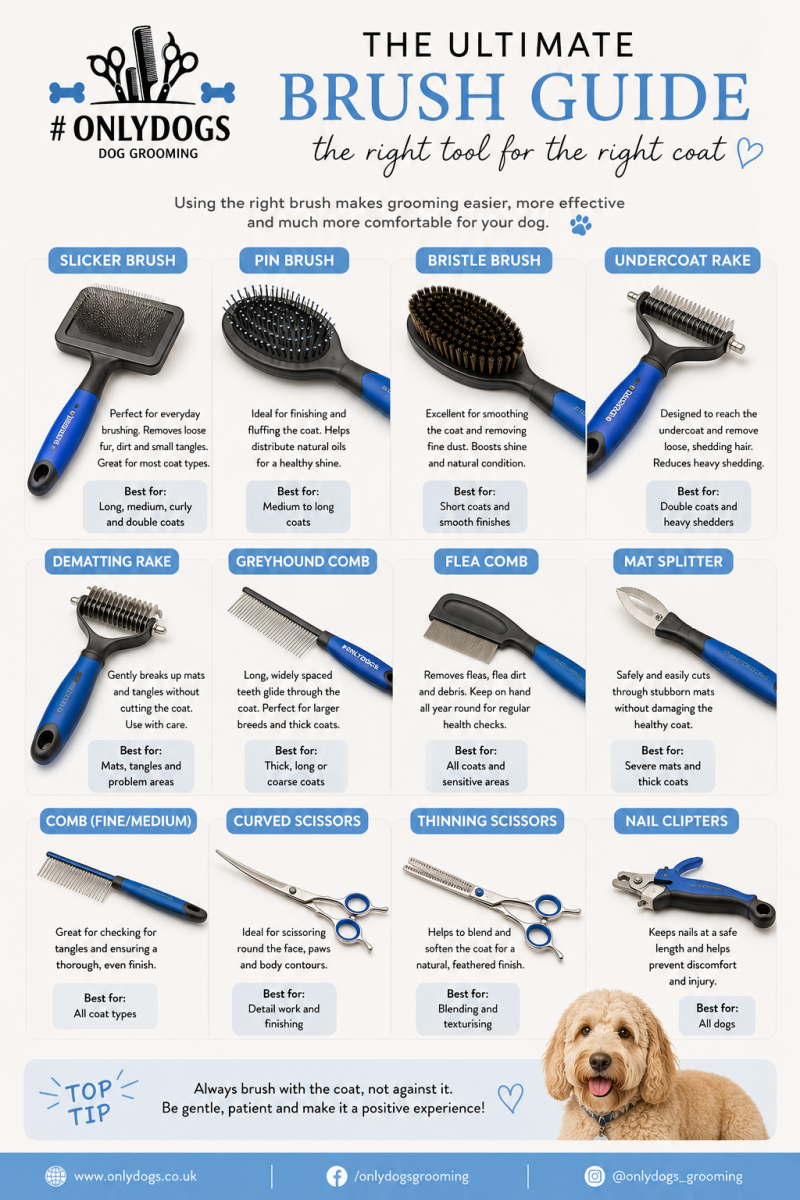
Different coats need different tools. Slicker brushes work well for many longer coats, while rubber grooming mitts are great for short-haired dogs. A metal comb is useful for checking you've reached all the way through the coat.
Brush in sections.
Rather than brushing the whole coat at once, work in small areas.
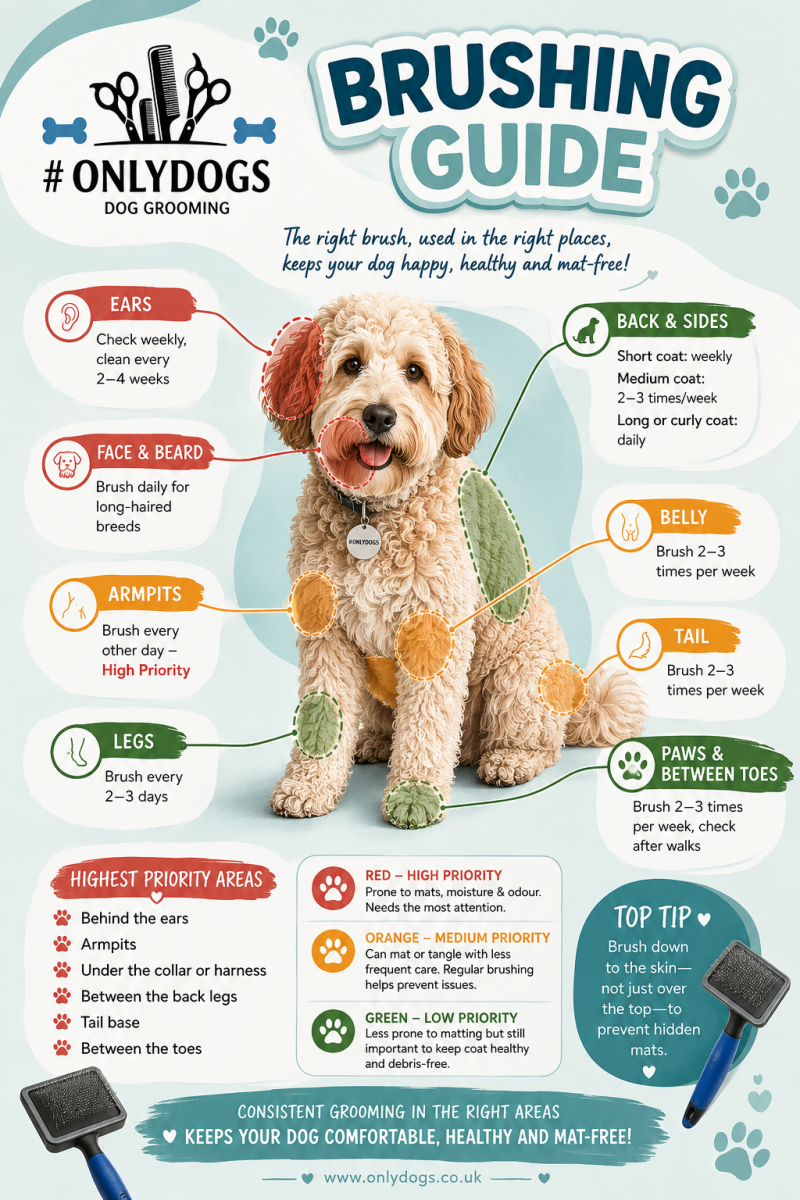
Brush right down to the skin.
Many mats start underneath the top layer of fur. Lift the coat in layers and gently brush from the skin outwards.
Be gentle around sensitive areas.
Take extra care around the ears, legs, tummy, armpits, tail, and behind the collar—these areas tangle the fastest.
Reward your dog.
Lots of praise and the occasional treat help create positive grooming experiences.
What Happens If You Skip Grooming?
Life gets busy—we completely understand! But leaving grooming too long can lead to:
-
Painful mats pulling on the skin
-
Skin infections
-
Overgrown nails
-
Dirty ears
-
Fleas or ticks going unnoticed
-
Difficulty regulating body temperature
-
Discomfort when walking or moving
In severe cases, heavily matted coats may need to be clipped very short to remove the tangles safely.
Seasonal Grooming Tips
Dogs often need a little extra help during seasonal changes.
Spring and Autumn
Many double-coated breeds "blow" their coat, meaning they shed large amounts of undercoat. More frequent brushing helps remove loose hair before it ends up all over your sofa!
Summer
A tidy coat helps keep your dog comfortable, but remember that many coats also protect against heat and sunburn. Shaving isn't always the best option, especially for double-coated breeds.
Winter
Longer coats can collect mud, leaves, and snow. Regular brushing keeps everything clean and helps prevent tangles.
Every Dog Is Different
Breed is only one part of the story.
Your dog's age, activity level, swimming habits, health, and even favourite sleeping position can affect how quickly their coat becomes tangled.
If you're unsure how often your dog should be groomed, we're always happy to offer advice based on their individual coat and lifestyle.
The Bottom Line
So, how often should you groom your dog?
It all depends on their coat type—but one thing is true for every dog:
Regular brushing at home, combined with professional grooming appointments, helps keep your dog healthy, comfortable, and looking their very best.
Whether your dog needs a quick tidy every couple of months or regular pamper sessions every four to six weeks, keeping on top of grooming makes life easier for both of you.
After all, a well-groomed dog is usually a happier dog... and let's be honest, they're even more irresistible when they're freshly fluffed!
Add comment
Comments